Wordplay riddles are tiny brain workouts: short, sneaky, and deeply satisfying when you get them. One of those classic language tricks asks:
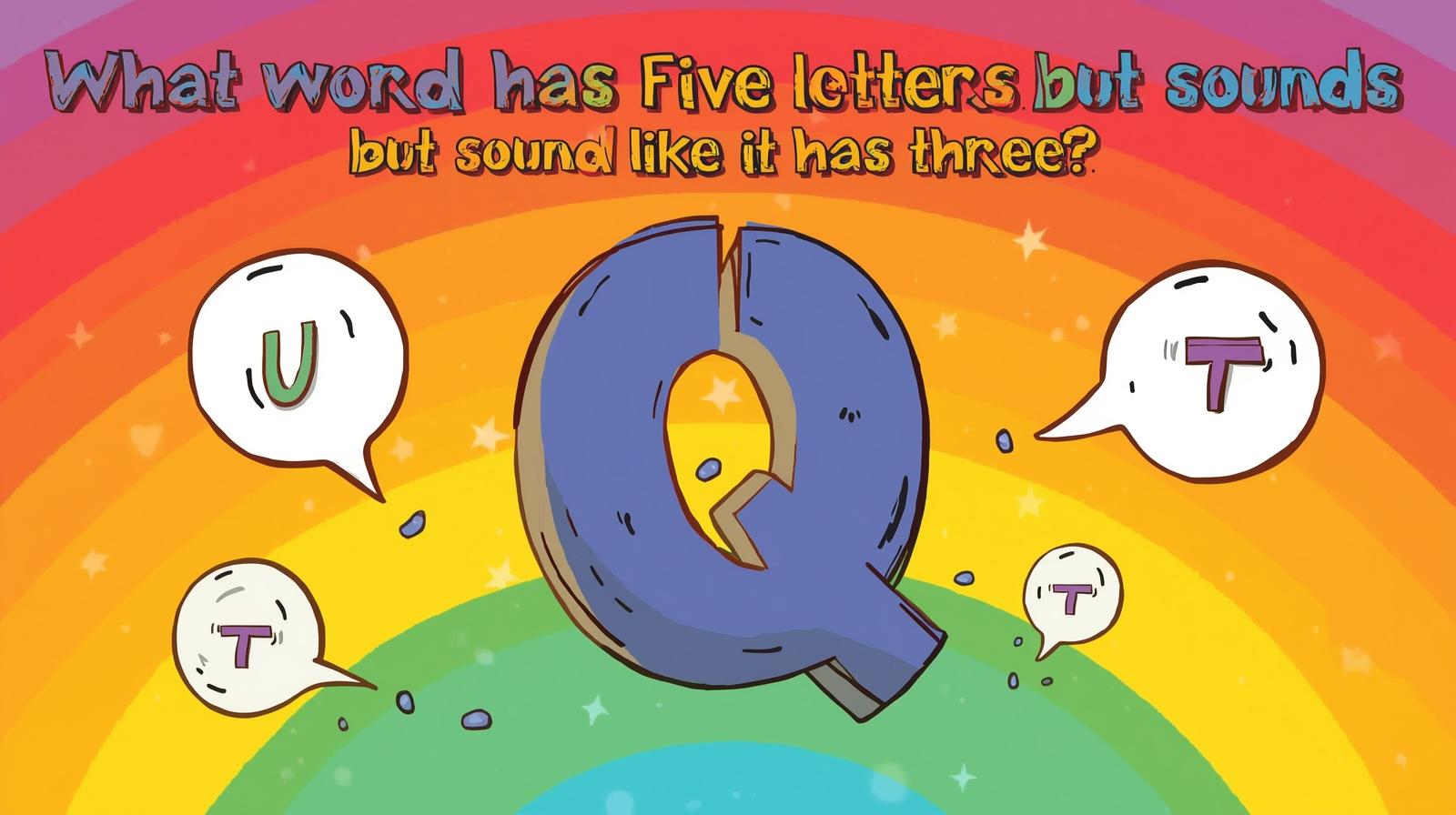
“What word has five letters but sounds like it has three?”
At first, you might stare at the alphabet or count syllables. But the riddle’s trick lies in pronunciation and spelling — not how many syllables the word uses. Ready for hints, the reveal, and a fun breakdown that’ll make you smile? Let’s go.
The Riddle in Full
Riddle: What word has five letters but sounds like it has three?
Hold that thought — we’ll drop a few clues below before unveiling the answer. 😉
Clues to Help You Guess
- The spoken sound of this word is the same as a short, one-syllable word that’s spelled with three letters.
- It’s a word you might use when you’re waiting in line—or when you ask someone to signal you.
- Remove the trailing letters and it still sounds the same. (Try saying it out loud.)
- Think homophones and silent letters.
Any idea yet?
The Answer Revealed
Answer: “Queue” 🎉
“Queue” has five letters (Q-U-E-U-E) but it sounds exactly like the three-letter word “cue” — C-U-E. So it’s literally a five-letter word that sounds like a three-letter word. Neat, right?
Why This Riddle Is So Clever
This riddle wins because it plays on spelling vs. sound:
- Queue (5 letters): pronounced /kjuː/ — the same sound as…
- Cue (3 letters): pronounced /kjuː/ — identical in speech.
English is full of silent and repeated letters that affect spelling more than sound. In “queue,” the extra letters after the first “q” don’t change how the word is heard — they only change how it looks. That mismatch between appearance and pronunciation makes the riddle feel like a mini magic trick.
Mini Explainer (Why the Extra Letters?)
- The word “queue” comes from French, where repeated vowels and endings reflect historical spelling.
- In modern English pronunciation the letters after the first few don’t change the sound, but they remain because of etymology and spelling rules.
- So when you say “queue” you’re actually saying the same sound as “cue”—even though the written word looks longer.
Fun Variations & Related Riddles
If you enjoy this style of language trick, here are a few more riddles and wordplay brainteasers to try:
- Riddle: What five-letter word becomes shorter when you add two letters to it?
Answer: Short (add “er” → shorter). - Riddle: What English word retains its pronunciation even after you take away four of its five letters?
Answer: Queue (remove the last four letters and it’s still pronounced the same). - Riddle: What starts with an E, ends with an E, but only contains one letter?
Answer: Envelope. - Riddle: What word is spelled the same forwards and backwards and is fun to say?
Answer: Level / radar (palindromes!).
Why People Love This Riddle
- Quick payoff: Short setup, satisfying “aha!” moment.
- Educational: Great for teaching homophones, phonetics, and etymology.
- Shareable: Perfect for classrooms, social posts, or party icebreakers.
- Mind-bending in a tiny package: Shows how weird and fun English can be.
FAQs About This Riddle
Q: Is “queue” the only five-letter word that sounds like a shorter word?
A: It’s the most famous example because “queue” sounds exactly like “cue.” There are other words with silent letters or weird spellings, but few match this exact five-letter/three-letter swap so neatly.
Q: Why does “queue” have extra letters if they don’t change the sound?
A: Historical spelling and language borrowing (from French) are why those letters remain. English spelling often preserves history more than sound.
Q: Is this riddle appropriate for kids?
A: Yes — it’s kid-friendly and a fun way to introduce children to pronunciation vs. spelling.
Q: How can I use this riddle in teaching?
A: Use it to demonstrate homophones, silent letters, and the idea that written words and spoken language don’t always match. Ask students for other examples.
Final Thoughts
Simple riddles that hinge on spelling and sound, like “What word has five letters but sounds like it has three?”, are tiny celebrations of language. The answer—queue—is a witty reminder that English loves to surprise us: what looks long on the page can be short in speech. Next time someone asks you this riddle, say it out loud and watch them smile when they hear the reveal.
👉 Did you guess “queue” before reading the answer? Tell me where you first heard this riddle — or throw one back at me and let’s keep the wordplay rolling!