Food jokes and puns for classroom fun bring laughter into learning without breaking focus. A quick joke about pizza or apples can wake up a tired room and reset attention faster than a long speech.
Students connect easily with food humor because it comes from everyday life. Everyone understands lunch, snacks, and favorite meals. That shared experience turns simple wordplay into a moment of connection.
This guide gathers school-friendly food jokes that teachers can use during lessons, breaks, or transitions. Each section keeps the tone light while staying appropriate for mixed age groups.
Food Puns for Classroom Fun
Younger learners respond best to clear structure and gentle punchlines. These jokes use basic ideas and easy vocabulary.
- Why did the banana go to school? Because it wanted to be a smart peel.
- What did the apple say to the teacher? I am ready to learn today.
- Why did the bread bring a notebook? It wanted to study its crust.
- What kind of fruit loves math? A pair.
- Why did the cookie raise its hand? It wanted to answer the roll call.
These jokes work well during morning routines or quick breaks between subjects.
Clever Food Puns for Classroom Fun
As students grow, they enjoy wordplay that feels a little sharper. These jokes still stay clean but rely more on language than on visuals.
- I told my sandwich to stay focused. It said it was on a roll.
- The pizza studied history to learn about its past toppings.
- A carrot joined the debate club because it had strong roots in opinion.
- The grape wanted to be a singer, but it kept losing its pitch.
- Rice never panics because it already knows how to stick together.
These lines work well in middle and secondary classrooms where language skills are stronger.
Lunchroom Food Puns for Classroom Fun
The lunchroom is a natural setting for food humor. These jokes connect school life with what is on the tray.
- Why did the student bring string to lunch? To tie up loose noodles.
- The milk felt confident because it was well balanced.
- The salad stayed quiet because it did not want to stir trouble.
- The chicken nugget said it was small but mighty.
- The juice box wanted respect because it had a lot of pressure.
Teachers can use these jokes when lining up for lunch or starting afternoon classes.
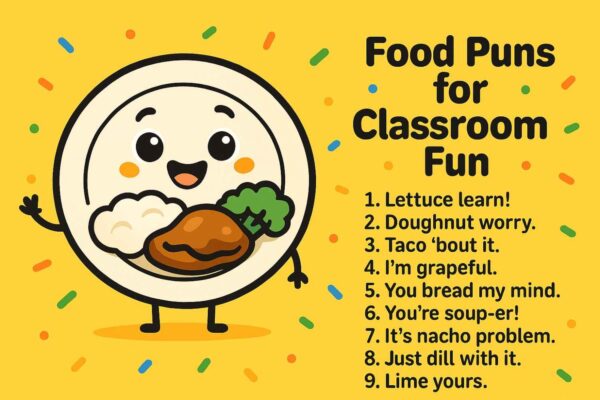
Cool Food Puns for Classroom Fun
Fruit jokes stay popular because the items are common and colorful. They also link easily to health and science lessons.
- Why did the orange stop running? It ran out of juice.
- The apple joined the class because it wanted to be top of the bunch.
- The strawberry was embarrassed because it was in a jam.
- The pear felt lucky because it always had a partner.
- The watermelon brought a suitcase because it was full of seeds.
Fruit jokes also support lessons about nutrition and food groups.
You Might Also Like: 500+ Perefct Salad Puns That Toss in Humor
Top Food Puns for Classroom Fun
Vegetables are perfect for gentle humor because many students already react strongly to them. Turning them into jokes changes the mood.
- Why did the potato sit down? It was tired of standing in line.
- The carrot tried to be funny but stayed serious about health.
- The cucumber stayed calm under pressure.
- The onion told stories that made everyone cry.
- The broccoli said it was branching out into new subjects.
These jokes work especially well during science or health education topics.
Breakfast Food Puns for Classroom Fun
Morning lessons benefit from energy. Breakfast jokes can help students wake up mentally.
- Why did the egg go to school? To get eggucated.
- The toast felt proud because it rose to the challenge.
- The cereal said it loved school because it learned in bowls.
- The pancake wanted a job flipping pages.
- The milk joined math class because it liked solving problems.
They fit naturally into homeroom or first period sessions.
Teachers’ Food Puns for Classroom Fun
Food jokes work best when used with purpose. They should not replace teaching but support it.
A joke can open a lesson and set a friendly tone. It can also mark transitions between activities. One short pun often works better than several in a row.
Teachers should match jokes to the age level. Simple humor fits younger students, while word-based puns suit older ones. Timing matters as well. A joke during high focus moments may distract instead of help.
Used carefully, humor becomes part of classroom culture rather than a disruption.
Why Food Jokes Work Well in Classrooms
Humor improves memory. When students laugh, their brains relax, which helps them absorb information more easily. Food jokes feel safe because they avoid sensitive topics and focus on objects students see daily.
Another advantage is inclusivity. A joke about bananas or bread does not require cultural knowledge or advanced language skills. Most students understand the setup immediately.
Food jokes also help with classroom management. A short pun can calm restless energy and redirect attention without sounding strict or formal.
Encouraging Students to Create Their Own Food Puns
Letting students make their own jokes builds creativity and language skills. It also increases participation.
One method is to write a food word on the board and ask students to form a pun around it. Another option is group work, where each team creates one joke to share.
This activity supports vocabulary development and confidence. Students enjoy hearing their jokes aloud, which strengthens classroom bonds.
The Educational Value of Food Humor
Food jokes are not only for laughs. They support learning in subtle ways.
They reinforce word meaning through sound similarity and context. They help students practice sentence structure and timing. They also improve listening skills because punchlines depend on attention.
Humor tied to real objects such as apples or bread also helps memory. Students are more likely to remember a lesson that started with a smile.
Food Jokes and Puns for Classroom Fun in Daily Lessons
Food jokes and puns for classroom fun can fit into nearly any subject. In math, they can introduce word problems. In language arts, they can illustrate homophones. In science, they can support lessons on nutrition and plants.
They also improve relationships. A teacher who shares light humor often feels more approachable. Students become more comfortable asking questions and engaging in discussion.
Over time, these small moments create a learning space that feels welcoming rather than rigid.
Final Thought
Food jokes and puns for classroom fun offer a simple way to add warmth and energy to school days. They work because food is familiar, language is playful, and laughter builds connection.
From fruit-and-vegetable jokes to lunchroom lines and breakfast humor, these puns stay clean and flexible. They can open lessons, ease transitions, or give students a mental break.
When used thoughtfully, food humor becomes more than entertainment. It becomes a teaching tool that supports focus, creativity, and positive classroom culture.